
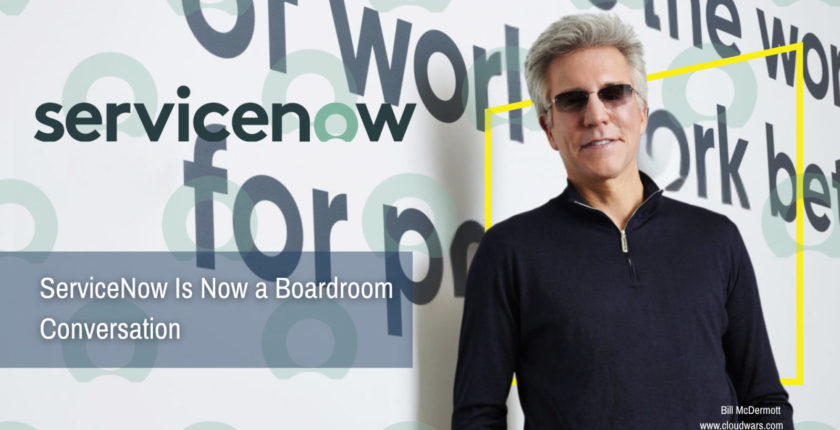
Every Board Has a ServiceNow Problem. Most Just Don’t Know It Yet.
The opportunity is enormous for the organisations that engage with the platform seriously. ServiceNow has been transparent about where it is going and the destination is genuinely exciting.
When ServiceNow appears on a board agenda, it is almost always framed as an IT update. That framing is now dangerously out of date.
ServiceNow is one of the most consequential enterprise platforms of this generation. It’s becoming the operational backbone of the enterprise, the layer that governs how work moves across systems, teams, and AI agents. The companies that truly understand what ServiceNow is building right now are pulling ahead, and the gap between them and everyone else is widening every quarter.
Leading Boards increasingly recognise ServiceNow as far more than a helpdesk upgrade; they see it as the platform reshaping how the enterprise operates, orchestrates and delivers value.
And ServiceNow is now a boardroom conversation. To help move your business along, here are five questions that belong in your next board meeting.
1. Do we own our orchestration layer or are we renting it?
#ServiceNow has done something remarkable. Rather than competing with ERP or CRM platforms, it has positioned itself above them as the coordinating layer that connects how work moves across the enterprise.
The debate used to be about systems of record, who owns the data, where it sits. That debate has moved. The real question now is who controls how workflows when humans, systems, and AI agents are all acting at once.
ServiceNow has built the answer to that question into its platform architecture, and the boards that recognise that early are the ones making the most deliberate technology decisions right now.
2. Who governs our AI agents when they get it wrong?
This is where ServiceNow’s thinking is genuinely ahead of the market.
Organisations are already deploying AI that resolves incidents, processes requests, and executes operational decisions without human intervention at every step, and ServiceNow has been building governance, auditability, and permissioned control directly into its platform from the ground up.
The capability is real and the governance frameworks of most organisations are not keeping pace with it. When an AI agent makes the wrong call, and it will, ServiceNow is already asking the right questions about accountability, auditability, and compliance boundaries. Most boards are not. This is a leadership and liability question, and it belongs in the boardroom now.
3. Is our ServiceNow investment a cost centre or a strategic asset?
The organisations that are getting the most from ServiceNow are the ones whose boards made a deliberate decision to treat it as a strategic capability rather than an IT cost line.
When ServiceNow functions as the orchestration layer of the enterprise, connecting AI, data, and workflows into a coherent operational backbone, the return compounds over time. The platform rewards investment and strategic intent.
The organisations that understood this early are now significantly ahead, with faster decision making, cleaner governance, and a platform that scales with their ambition rather than against it.
4. Do we have the right leadership to run a hybrid human and AI workforce?
ServiceNow is enabling something genuinely new. The ability to coordinate a workforce of both humans and AI agents within governed, auditable workflows is a capability that simply did not exist five years ago.
From my position in executive search, the signal is already clear. The leaders now in demand are those who can connect ServiceNow’s capabilities across AI, workflow, data, and operating model into a narrative that resonates at board level.
That capability is scarce, and the organisations that secure it early will unlock the full potential of what ServiceNow makes possible. The ones that leave it too long will find themselves with a world class platform and a leadership gap that limits what they can do with it.
5. What does our enterprise look like in three years if ServiceNow executes its roadmap?
Bill McDermott is not running a software company. He is redesigning the control plane of the enterprise and the roadmap he has laid out is one of the most ambitious and coherent in enterprise technology.
ServiceNow is methodically building toward a future where it orchestrates AI agents, governs digital work, and manages the full complexity of the modern enterprise operating model. The companies war-gaming that scenario today are positioning themselves to move with that momentum rather than against it.
Platform risk deserves the same boardroom attention as geopolitical risk, and ServiceNow’s trajectory is one of the most significant strategic forces in enterprise technology right now.
The opportunity is enormous for the organisations that engage with the platform seriously. ServiceNow has been transparent about where it is going and the destination is genuinely exciting.
The orchestration layer. The governance layer for an autonomous enterprise workforce. The platform that sits above the stack and directs how intelligent work gets done at scale.
These five questions are not technical questions. They are strategy, governance, leadership, and risk questions, and the boards asking them now will be the ones best positioned to capture what ServiceNow is making possible.
In a market moving this fast that advantage compounds quickly.